
Electric Car Charging Companies in the USA: A Deep Analysis of Networks, Costs, and Reliability
Understand how electric car charging companies operate across the U.S., and learn how charging infrastructure shapes convenience and EV adoption.
A deeper understanding of how charging companies operate, how networks differ, and how costs are structured allows drivers to make informed decisions.
As infrastructure continues to scale nationwide, these companies increasingly define the real-world feasibility of electric mobility.
Explore the expanding world of 2025 electric SUV models and learn range, pricing, charging networks, incentives, and battery tech.
Learn How Electric Car Charging Companies Build and Operate Networks 🇺🇸
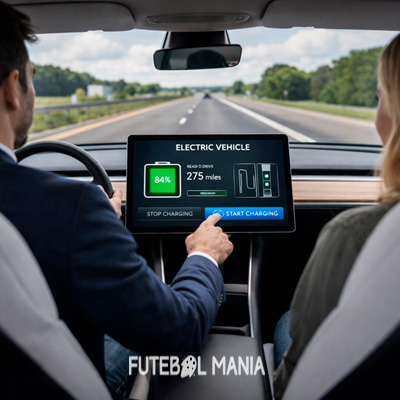
Electric car charging companies are responsible for site selection, hardware installation, grid integration, software management, and ongoing maintenance.
Building a reliable network involves coordination with utilities, municipalities, property owners, and federal incentive programs.
These systems enable remote diagnostics, pricing updates, session management, and user access through mobile applications, improving transparency and usability for drivers.
Explore new electric cars for sale USA with better pricing!

Why Electric Car Charging Companies Matter for EV Adoption 💡
Charging availability plays a decisive role in consumer confidence. Drivers are far more likely to adopt EVs when charging is consistent, predictable, and conveniently located.
Charging companies address range anxiety by expanding coverage in urban areas, along highways, and near workplaces.
Their investments directly influence how comfortable drivers feel relying on EVs for both daily commutes and long-distance travel.
Public Charging Infrastructure Versus Home Charging 🔌
Home charging remains the primary method for most EV owners, but public infrastructure fills critical gaps.
Apartment dwellers, urban residents, and travelers depend heavily on public chargers.
Charging companies focus on providing this shared infrastructure, ensuring EV ownership remains viable even without private home charging access.
Charger Types Deployed by Electric Car Charging Companies ⚡
Charging networks deploy multiple charger types to balance speed, cost, and grid demand.
- Level 2 chargers for residential, workplace, and long-duration parking
- DC fast chargers for rapid refueling during travel
- Ultra-fast chargers designed for highway corridors
Each type serves a specific role in the broader charging ecosystem.
Learn Major Electric Car Charging Companies and Network Strategies 🚗
The U.S. charging market includes several dominant players, each pursuing distinct strategies based on target users and locations.
Comparison of Leading Electric Car Charging Companies 📊
| Charging Network | Primary Focus | Strengths |
| ChargePoint | Level 2 public and workplace | Dense urban coverage |
| Electrify America | DC fast and ultra-fast | Highway travel |
| EVgo | Urban DC fast charging | City-based access |
| Blink Charging | Mixed-use charging | Regional expansion |
Understanding these strategies helps drivers choose networks aligned with their travel patterns.
Pricing Models Used by Electric Car Charging Companies 💰
Pricing structures vary widely across charging companies. Some charge per kilowatt-hour, others per minute, and some per charging session.
Fast chargers typically command higher rates due to infrastructure costs and power demand. Slower chargers offer lower rates but require longer dwell times.
Understanding these differences helps drivers manage charging expenses effectively.
Membership Programs and Cost Optimization 🔑
Many networks offer subscription plans that reduce per-session costs for frequent users.
Membership benefits often include discounted energy rates, waived session fees, and access to premium locations, making them attractive for drivers who rely heavily on public charging.
View Reliability, Uptime, and Maintenance Challenges 🛠️
Reliability remains one of the biggest challenges for charging networks. Out-of-service chargers, software glitches, and grid limitations can disrupt charging experiences.
Leading charging companies invest in predictive maintenance, remote monitoring, and rapid repair programs to improve uptime.
Network reliability is becoming a key competitive differentiator.
Ready to go electric? Discover the best electric cars SUV models of 2025 and find your perfect mix of range, power, and technology.
How Charging Companies Enable Long-Distance EV Travel 🧭
Highway fast-charging corridors are essential for long-distance travel. Charging companies strategically deploy DC fast chargers along major routes, travel centers, and rest areas.
These corridors reduce charging downtime and expand EV usability beyond city limits, making electric road trips increasingly practical.
The Future Role of Electric Car Charging Companies in the U.S. 🏁
Electric car charging companies will remain foundational to the EV ecosystem. Continued investment in charger speed, network density, and reliability will determine how quickly EV adoption accelerates.
As technology advances and public-private partnerships expand, charging networks will evolve into a seamless utility supporting cleaner, more accessible transportation nationwide.
FAQ ❓
- Do charging companies operate across all U.S. states?
- Most major networks operate nationwide, though charger density varies by region.
- Most major networks operate nationwide, though charger density varies by region.
- Are prices standardized among charging companies?
- No, pricing varies by network, location, and charger type.
- No, pricing varies by network, location, and charger type.
- Can EV drivers use multiple charging networks?
- Yes, most drivers rely on several networks depending on location and travel needs.
- Yes, most drivers rely on several networks depending on location and travel needs.
- Do charging companies offer ultra-fast charging?
- Yes, many networks deploy DC fast and ultra-fast chargers.
- Yes, many networks deploy DC fast and ultra-fast chargers.
- Is public charging reliable enough for daily EV use?
- Reliability continues improving as networks invest in maintenance and monitoring.
