
Explore the Most Advanced 2026 Electric Cars and See How EV Technology Is Redefining Driving
Before buying your next EV, explore the newest 2026 electric cars, compare real driving range, technology features, and performance improvements that make these models smarter.
The newest 2026 electric cars represent a mature stage of innovation where range, charging speed, performance, and digital connectivity all improve simultaneously.
Automakers are investing billions in battery development and new EV platforms designed specifically for electric drivetrains, creating vehicles that outperform many models.
Request a personalized auto loan quote online and compare real APR offers that could lower your total repayment.
Why 2026 Electric Cars Represent a Major Leap in EV Technology ⚡
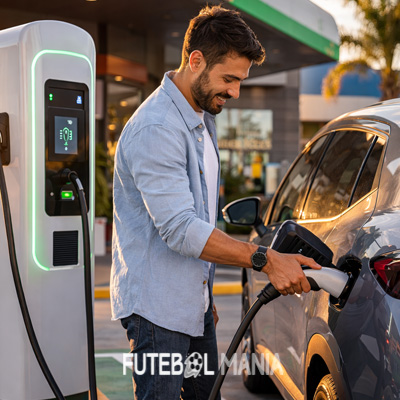
Electric vehicles introduced a decade ago often struggled with limited driving range and slow charging speeds.
Battery density has increased, allowing vehicles to travel farther on a single charge while maintaining similar battery sizes.
These systems monitor battery temperature, driving conditions, and charging behavior to maximize performance and extend battery lifespan.
Automakers now design entire vehicle architectures around electric platforms, which improves interior space and weight distribution.
Key technological improvements driving EV growth include:
- Higher-density lithium battery cells
- Advanced battery cooling systems
- Ultra-fast DC charging technology
- Over-the-air software updates
- More efficient electric motor design

Core Technologies Powering 2026 Electric Cars 🔋
Every modern EV relies on a combination of advanced engineering systems working together.
Batteries store energy, electric motors convert that energy into motion, and intelligent software manages efficiency and performance.
The newest 2026 electric cars integrate these technologies in ways that maximize both range and power.
Regenerative braking captures energy normally lost during braking and sends it back to the battery, improving overall efficiency during city driving.
Table – Core EV Technology Components
| Component | Function | Benefit |
| Lithium-Ion Battery Pack | Stores electrical energy | Enables long driving range |
| Electric Motor | Converts electricity into motion | Instant torque and acceleration |
| Regenerative Braking | Recovers braking energy | Improves efficiency |
| Thermal Management System | Controls battery temperature | Protects battery health |
| Vehicle Software Platform | Manages energy distribution | Optimizes driving performance |
These technologies define the engineering foundation of modern 2026 electric cars.
Most Anticipated 2026 Electric Cars Arriving in the U.S. Market 🚗
Automakers across the globe are preparing several major EV launches expected to attract strong attention in the American market.
These models promise longer range, faster charging, and advanced driver-assistance technologies.
Tesla Model 3 Performance 2026 Edition 🧠
Tesla continues to lead EV innovation with improved versions of its most popular vehicles.
The updated Model 3 Performance expected among 2026 electric cars will likely include improved acceleration, upgraded battery efficiency, and enhanced driver-assistance.
Expected highlights include:
- Estimated range around 330 miles
- Dual-motor all-wheel drive system
- High-performance acceleration
- Tesla Autopilot driver assistance
Tesla’s strong charging network also provides one of the most convenient long-distance EV travel experiences in the United States.
Volkswagen ID.7 Long-Range Electric Sedan 🌍
Volkswagen is expanding its global electric lineup with the ID.7 sedan. Designed for long-distance travel, this EV focuses on comfort, aerodynamics, and extended driving range.
Key features include:
- Range exceeding 350 miles
- Large aerodynamic body design
- Advanced digital cockpit
- Fast-charging battery platform
Among 2026 electric cars, the ID.7 targets drivers who prefer sedan practicality combined with EV efficiency.
BMW i5 Electric Luxury Sedan ⚙️
BMW is rapidly electrifying its lineup, and the i5 represents a premium entry into the EV sedan category.
This model combines electric performance with traditional BMW driving dynamics and luxury interior design.
Important characteristics include:
- Dual-motor electric powertrain
- High-performance acceleration
- Advanced driver assistance technology
- Premium interior materials
The i5 demonstrates how luxury brands are adapting to the evolution of 2026 electric cars.
Kia EV9 Three-Row Electric SUV 🔧
Kia has quickly become a major competitor in the EV market. The EV9 is a large electric SUV designed for families who want space and advanced technology.
Expected highlights include:
- Range close to 300 miles
- Ultra-fast charging capability
- Spacious three-row interior
- Modern digital dashboard
The EV9 represents the growing diversity of 2026 electric cars, offering practicality and strong electric performance in a large SUV format.
See how auto loan 400 credit score approvals work, expected rates, and smart ways to control costs while rebuilding credit in the U.S.
Table – Estimated Specifications of Major 2026 Electric Cars
| Model | Estimated Range |
| Tesla Model 3 Performance | ~330 miles |
| Volkswagen ID.7 | ~350 miles |
| BMW i5 | ~320 miles |
| Kia EV9 | ~300 miles |
These vehicles illustrate how 2026 electric cars combine range, technology, and performance improvements.
Cost Advantages of Owning 2026 Electric Cars 💰
Many drivers choose EVs primarily because of long-term cost savings.
Electric vehicles typically require less maintenance since they have fewer moving mechanical parts compared with gasoline engines.
Oil changes, complex transmissions, and exhaust systems are not required in most EV designs.
Owners of 2026 electric cars often experience several financial advantages over time.
Electricity usually costs less than gasoline per mile traveled, and regenerative braking reduces wear on brake components.
Government incentives and tax credits may also reduce the initial purchase price for qualifying vehicles.
Important financial benefits include:
- Lower fuel costs compared with gasoline vehicles
- Reduced maintenance expenses
- Potential EV tax incentives
- Higher efficiency in urban driving
- Long battery warranties offered by manufacturers
These factors make electric vehicles increasingly competitive with traditional cars.
Analyze auto loan pre approval no hard pull and understand how lenders evaluate risk before any credit inquiry is applied.
Charging Infrastructure Supporting 2026 Electric Cars 🔌
One of the biggest developments supporting EV adoption is the rapid growth of charging infrastructure.
Thousands of fast-charging stations now exist across the United States, allowing drivers to recharge batteries quickly during long trips.
Most 2026 electric cars support DC fast-charging technology capable of restoring 80 percent battery capacity in roughly 25 to 35 minutes depending on the charging system.
Many drivers also install Level 2 chargers at home, allowing overnight charging that fully replenishes the battery before the next day.
Charging convenience continues improving as public charging networks expand along highways, shopping centers, and urban areas.
How 2026 Electric Cars Are Driving the Next Era of Transportation 🚀
The rapid advancement of electric vehicle technology signals a major transformation in the global automotive industry.
Automakers are now competing to deliver longer battery range, faster charging speeds, and smarter vehicle software that enhances the overall driving experience.
As the newest generation of 2026 electric cars reaches the market, consumers will benefit from improved efficiency and vehicles that integrate seamlessly with digital ecosystems.
For commuters, families, and technology enthusiasts alike, electric mobility is no longer a distant future but an increasingly practical reality shaping how transportation will evolve.
FAQ ❓
- Are electric vehicles cheaper to operate than gasoline cars?
- Yes. Electricity costs less per mile than gasoline in many regions and EVs require less mechanical maintenance.
- How far can modern electric cars travel on a single charge?
- Many modern EVs travel between 300 and 350 miles depending on battery size and driving conditions.
- How long does fast charging take?
- DC fast charging can recharge many EV batteries to around 80 percent in roughly 30 minutes.
- Are electric vehicles reliable for daily commuting?
- Yes. Electric vehicles provide consistent performance, quiet driving, and efficient energy use for everyday travel.
- Will electric vehicles replace gasoline cars in the future?
- Many experts expect EV adoption to continue growing as battery technology and charging infrastructure improve.
