
BYD Atto 3 Delivers Electric SUV Engineering Focused on Efficiency and Battery Safety
The BYD Atto 3 is not positioned as a performance-first electric SUV, but rather as a balanced EV engineered around efficiency, battery safety, and urban usability.
Built on BYD’s dedicated e-Platform 3.0, the vehicle emphasizes structural integration, thermal stability, and predictable power delivery.
Compare new electric car technologies and evaluate long-term ownership costs before choosing your next car in the U.S..
Discover BYD Atto 3 Electric Platform and Structural Design Explained ⚙️
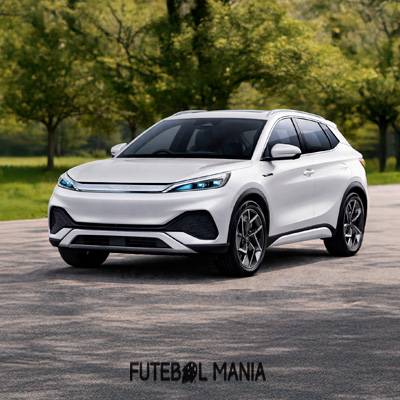
The BYD Atto 3 uses the e-Platform 3.0, a modular EV architecture designed to integrate battery, drivetrain, and vehicle structure as a unified system.
This approach improves rigidity while reducing unnecessary mass.
Key structural characteristics include:
- Cell-to-pack battery integration, eliminating traditional modules
- High torsional rigidity, improving handling stability
- Optimized weight distribution, aiding predictable cornering
- Lower center of gravity compared to ICE-based SUVs

Battery Technology in the BYD Atto 3 and Why It Matters 🔋
At the core of the Atto 3 is BYD’s proprietary Blade Battery, based on lithium iron phosphate (LFP) chemistry.
Unlike NMC batteries, LFP prioritizes thermal stability and cycle life over extreme energy density.
| Battery Type | Capacity | Chemistry | Cooling System |
| Blade Battery | 60.48 kWh | LFP | Liquid-cooled |
Learn Electric Motor Output and Power Delivery Characteristics ⚡
Rather than chasing peak horsepower, the BYD Atto 3 focuses on smooth torque delivery and efficiency.
The front-mounted permanent magnet synchronous motor is tuned for linear acceleration, ideal for city and suburban driving.
Motor behavior characteristics include:
- Immediate torque availability
- Progressive power curve
- Reduced wheelspin through electronic modulation
- Lower stress on drivetrain components
Driving Range and Real-World Efficiency Considerations 🚗
Official range figures for the BYD Atto 3 are measured under WLTP standards, but real-world efficiency depends heavily on driving conditions, climate, and charging habits.
Efficiency-influencing factors include:
- Moderate vehicle weight for an EV SUV
- Regenerative braking calibration
- Aerodynamic drag coefficient
- Thermal management efficiency
Charging Capabilities and Battery Management Logic 🔌
Charging performance is governed by battery chemistry and thermal control. The BYD Atto 3 supports DC fast charging but prioritizes battery longevity over extreme peak speeds.
Charging behavior highlights:
- Stable charging curve
- Conservative peak DC rate
- Reduced degradation over time
| Charging Type | Power Rating | Approx. Time |
| AC (Home/Wallbox) | 11 kW | ~6.5 hours |
| DC Fast Charging | 88 kW | 30–80% in ~29 min |
View Suspension, Steering, and Ride Dynamics 🛞
The Atto 3 uses a front MacPherson strut and rear multi-link suspension setup, offering a good balance between comfort and control.
Chassis tuning priorities include:
- Compliance over rough urban roads
- Controlled body roll
- Predictable steering feedback
- Low NVH levels for an EV
This setup makes the vehicle well-suited for everyday use rather than aggressive driving.
Analyze how electric car charging companies, reliability, and expansion plans directly affect long-term ownership costs.
Interior Engineering and Cabin Ergonomics 🧠
Inside, the Atto 3 emphasizes ergonomics and material durability. The cabin layout integrates a rotating infotainment screen, digital instrumentation, and soft-touch materials.
Interior technical highlights:
- Central rotating touchscreen
- Efficient HVAC integration with battery thermal system
- High sound insulation efficiency
- Flat floor improving rear passenger comfort
The interior design supports daily usability rather than minimalism for its own sake.
How the BYD Atto 3 Fits Into the Electric SUV Segment 🚀
From an engineering standpoint, the BYD Atto 3 competes as a safety-focused, efficiency-oriented electric SUV rather than a performance leader.
Its strengths lie in battery durability, predictable range, and platform integration, making it appealing for long-term ownership.
FAQ ❓
- What makes the Atto 3 battery different?
- The Blade Battery uses LFP chemistry for improved safety and longer cycle life.
- Is the Atto 3 focused on performance?
- No, it prioritizes efficiency, smooth power delivery, and durability.
- How realistic is the advertised range?
- Real-world mixed driving typically delivers 360–390 km.
- Does it support fast charging?
- Yes, up to 88 kW DC with conservative thermal management.
- Is the BYD Atto 3 suitable for daily commuting?
- Yes, it is optimized for urban and suburban driving scenarios.
