
2025 electric SUV full market breakdown with range insights, pricing tiers, charging performance, and buyer strategies
Compare features, performance, and ownership costs across top 2025 electric SUV options to secure the ideal balance of value, technology, and long-term efficiency.
The 2025 electric SUV segment has exploded into one of the most competitive spaces in the automotive industry.
Automakers are releasing new EVs packed with longer range, faster charging, expanded safety suites, and more refined interiors—while pricing becomes increasingly accessible.
Looking for affordable innovation? Explore the best electric cars under 60K that deliver premium performance and cutting-edge technology.
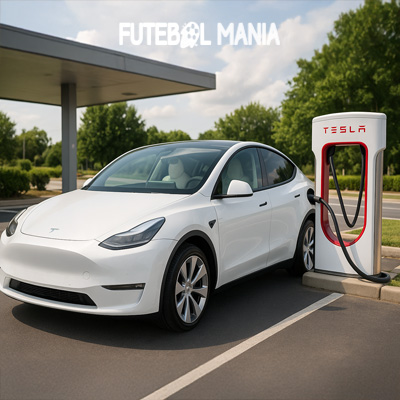
Compare 2025 electric SUV pricing, battery capacity, and real-world range results 🚙⚡
| Model | Starting Price | EPA Range | Battery (kWh) |
| Tesla Model Y 2025 | ~$47,000 | 310–330 mi | ~75 kWh |
| Hyundai Ioniq 5 2025 | ~$46,000 | 260–300 mi | 77.4 kWh |
| Kia EV6 2025 | ~$45,500 | 270–310 mi | 77.4 kWh |
| VW ID.4 2025 | ~$42,000 | 240–290 mi | 82 kWh |
| Chevy Equinox EV 2025 | ~$35,000 | 250–300 mi | 85 kWh |
| Rivian R2 2025 | ~$47,000 | 300–330 mi | 85–100 kWh |
Explore new electric cars for sale USA with better pricing!

Why 2025 EV SUVs outperform previous-year models 💡
- New nickel-manganese battery chemistries improve range and charging curves.
- Heat-pump standardization boosts cold-weather efficiency.
- Lightweight chassis reduce energy consumption by 3%–8%.
- Upgraded BMS (battery-management systems) slow degradation.
Explore interior innovation, passenger comfort, and tech integration in 2025 electric SUVs 🛋️🔌
Interior refinement has become a core differentiator for the 2025 electric SUV class, offering comfort levels traditionally associated with premium sedans.
Cabin and technology improvements 📱
- Extra-wide panoramic screens (14–17 inches) depending on model
- Integrated AI-driven voice assistants for navigation and climate
- Wireless Apple CarPlay / Android Auto on most non-Tesla models
- OTA updates unlocking performance, range improvements, and driver-assist upgrades
- Enhanced noise isolation due to battery-floor design
- Ambient lighting, ventilated seating, and premium audio available on mid-tier trims
The shift toward software-defined interiors allows 2025 EV SUVs to remain technologically relevant for years after purchase.
Evaluate performance, charging capability, platform voltage, and long-term battery health ⚙️🔋
Performance varies widely across the 2025 EV SUV lineup, especially in acceleration, charging speed, and regenerative braking sophistication.
- Dual-motor variants provide 320–430 hp for premium trims.
- 800-V EV platforms (E-GMP, Rivian, select Ford trims) allow ultra-fast charging.
- Fast-charging times for 10–80% range between 18–33 minutes.
- Battery chemistry improvements maintain 80–90% capacity at 100,000 miles.
| Model | Max DC Fast-Charge Speed | Notes |
| EV6 | 230 kW | Excellent long-trip EV |
| Ioniq 5 | 235 kW | Best charging curve in class |
| Rivian R2 | 200–220 kW | Adventure-ready powertrain |
| Mach-E | 180–200 kW | Great balance of speed + comfort |
| ID.4 | 150 kW | Affordable, practical EV |
Why 2025 charging networks improve ownership 📈
- Widespread NACS adoption increases Supercharger access.
- More 350-kW stations reduce long-trip stress.
- Smart navigation routes charging automatically.
Discover in details if an electric car is worth buying in 2025 with real data on cost, range, and long-term value.
See all incentives, rebates, and financing advantages for 2025 electric SUVs 💰🏦
Incentives play a major role in EV affordability, especially in 2025 as more models meet battery-material sourcing requirements.
- Up to $7,500 EV tax credit, depending on battery sourcing and income limits.
- Leasing bypasses restrictions, allowing nearly all 2025 EV SUVs to qualify.
State-Level Incentives
- Rebates of $1,000–$5,000
- Discounted registration in EV-friendly states
- HOV lane access for single-occupant EV drivers
Financing considerations for EV buyers
| Financing Type | APR Range | Key Advantage |
| Credit Union Financing | 4%–6% | Lowest long-term cost, ideal for EVs |
| Bank Financing | 5%–9% | Consistent approval structure |
| OEM Promotional Financing | 0%–4% | Best option when available |
| Leasing | Lower monthly payments | High residual values favor EV leasing |
Leasing remains extremely popular because automakers apply the commercial EV credit directly to monthly payment reductions.
Smart strategies for choosing the ideal 2025 electric SUV for your needs 🧠
Choosing the right EV SUV requires more than comparing range and price. Key factors include:
- Charging access along your commute and region
- Real-world winter range loss
- Resale value of different EV platforms
- Insurance cost variations between brands
- Long-term software update support
- Total cost of ownership, not just battery size
Evaluating these factors ensures long-term satisfaction and lower overall ownership cost.
FAQ 👀
- Which 2025 electric SUV offers the best performance?
- Dual-motor variants of the EV6, Mach-E GT, and Rivian R2 deliver some of the quickest acceleration.
- Dual-motor variants of the EV6, Mach-E GT, and Rivian R2 deliver some of the quickest acceleration.
- Do all EV SUVs qualify for the $7,500 credit?
- No. Eligibility depends on battery sourcing and income limits, but leasing bypasses most restrictions.
- No. Eligibility depends on battery sourcing and income limits, but leasing bypasses most restrictions.
- Is the 2025 EV SUV charging network better than before?
- Yes. NACS expansion and new 350-kW stations significantly improve convenience.
- Yes. NACS expansion and new 350-kW stations significantly improve convenience.
- How long do EV SUV batteries last?
- Most retain 80–90% capacity at 100,000 miles with proper thermal management.
- Most retain 80–90% capacity at 100,000 miles with proper thermal management.
- Should I lease or finance an electric SUV?
- Leasing may reduce monthly payments due to high EV residual values and applied tax credits.
- Leasing may reduce monthly payments due to high EV residual values and applied tax credits.
