
How to Secure a No Money Down Car Loan in the US: The Ultimate Guide
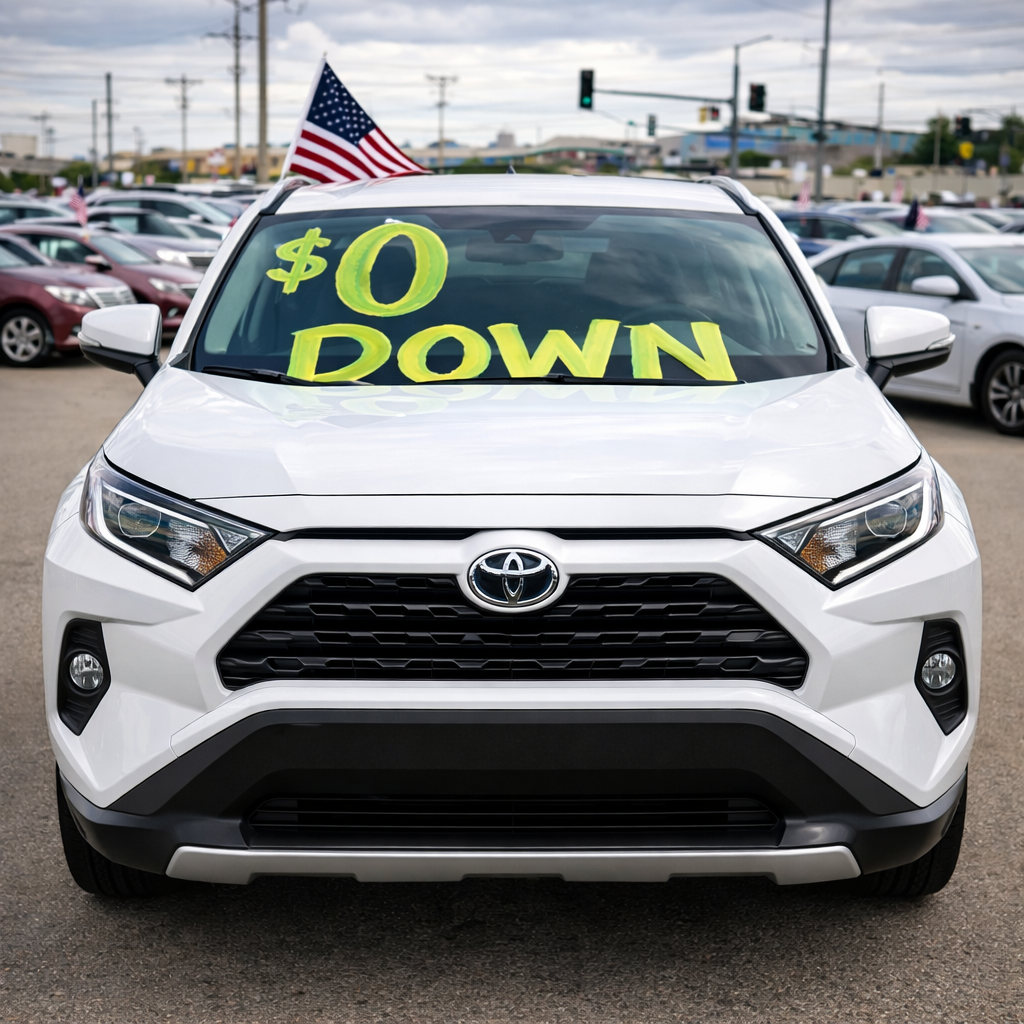
It is completely understandable to want a new vehicle even when your cash reserves are low. If you are short on upfront funds, a zero down payment auto loan—often called 100% vehicle financing—allows you to roll the entire purchase price of the car into your loan. This means you can drive off the lot without draining your savings account.
However, while skipping the upfront cost provides immediate relief, lenders take on more risk, which means you will face specific qualification hurdles and long-term financial trade-offs.
Here is everything you need to know about navigating the US auto lending market to find a $0 down car loan, what it takes to get approved, and how to protect your wallet in the process.
What is 100% Auto Financing?
A no money down car loan is exactly what it sounds like: the financial institution covers the total sticker price of the vehicle. You bypass the traditional lump-sum payment at signing, but you are still on the hook for state taxes, DMV registration fees, and the full principal plus interest over the loan term.
The Reality Check: By avoiding a down payment, your monthly installments will inevitably be higher, and you will pay more in total interest. It is a direct trade-off: you gain upfront convenience, but you assume a higher long-term cost.
Top US Lenders for Zero Down Car Loans
Securing the best deal means applying through the right channels. Different institutions cater to different financial profiles across the United States.
1. Credit Unions: The Community Advantage
Local and national credit unions (like PenFed or Navy Federal) are excellent starting points. Because they are member-owned, not-for-profit organizations, they consistently offer lower APRs and more forgiving terms than traditional big-box banks.
2. Major National Banks: Leverage Your Loyalty
Large retail banks are highly competitive, especially if you already hold a checking or savings account with them.
- Bank of America: Offers favorable $0 down terms, particularly for customers enrolled in their Preferred Rewards program (requires a strong FICO score).
- Capital One Auto Finance: Provides a highly rated online pre-qualification tool. You can view 100% financing offers with a “soft pull,” meaning you can shop around without hurting your credit score.
3. Captive Lenders: Automaker Incentives
Captive financing refers to the lending arms of car manufacturers (like Ford Motor Credit or Toyota Financial Services). Because their primary goal is moving metal off the dealership lot, they offer the most aggressive promotions.
Look out for holiday sales events offering 0% APR + $0 Down. These deals are usually restricted to brand-new models and buyers with top-tier credit.
- Ford Credit: Frequently runs zero-down, zero-interest specials on popular models like the F-150.
- GM Financial & Toyota Financial Services: Both offer robust incentives and pre-approval pathways for highly qualified buyers seeking zero-mileage vehicles.
4. Online Platforms & Subprime Specialists
If your credit history has some blemishes, traditional banks might deny a zero-down request. Fortunately, the online and subprime markets offer alternative routes.
- Carvana: This fully digital retailer bakes financing directly into their platform, allowing you to easily filter their nationwide inventory for cars requiring exactly $0 down.
- Westlake Financial & Auto Credit Express: These are heavyweights in the subprime auto sector. They match buyers with bad credit to specialized dealership networks willing to structure no-money-down loans, though you should expect significantly higher interest rates.
How to Qualify for a Vehicle Loan Without a Down Payment
Because the lender is fronting 100% of the cash, they will scrutinize your financial health. Strengthening these four pillars will maximize your approval odds:
- Exceptional Credit (740+ FICO Score): To unlock the absolute best promotions (like zero interest and zero down combined), you need a top-tier credit profile. This signals to lenders that you are a virtually risk-free borrower.
- Good Credit (660–739 FICO Score): You are still a very strong candidate for a $0 down loan through most banks and credit unions, but you will likely pay the standard market interest rate rather than a promotional APR.
- Verifiable, Steady Income: Lenders must ensure your salary can comfortably absorb the new monthly payment. Be ready to provide recent US pay stubs, W-2 forms, or tax returns to prove employment stability.
- Low Debt-to-Income (DTI) Ratio: DTI measures what percentage of your gross monthly income goes toward existing debts (like credit cards, student loans, or rent). Auto lenders generally want to see your DTI stay below 45% even after adding the new car payment.
The Hidden Danger: Being “Upside Down”
The single biggest risk of putting no money down is falling into negative equity, widely known in the US as being “upside down” or “underwater” on your loan.
Because a new car loses a chunk of its value the second you drive it off the dealership lot, financing 100% means your loan balance instantly exceeds the vehicle’s actual market value.
Why this is dangerous: If you total the car in an accident or it gets stolen, standard auto insurance only covers the current depreciated value of the vehicle. You would have to pay the remaining loan balance out of your own pocket.
The Solution: If you opt for zero down, it is crucial to purchase GAP (Guaranteed Asset Protection) Insurance. This relatively inexpensive add-on covers the “gap” between what your insurance pays out and what you still owe your lender, protecting you from a sudden financial disaster.
Frequently Asked Questions (FAQ)
- Can I get a no money down car loan with bad credit? Yes, it is possible through subprime networks like Auto Credit Express or Westlake Financial. However, be prepared for strict income verification, limited vehicle choices, and steep interest rates.
- Will applying for 100% financing tank my credit score? The loan itself is fine, but the “hard inquiry” pulled during the official application will cause a minor, temporary dip in your FICO score. Over time, making consistent, on-time payments will build your credit back up.
- Is it really that much better to put a little cash down? Absolutely. Even a small upfront payment of $500 to $1,000 shrinks your monthly obligation, reduces the total interest you will pay over the years, and gives you a much-needed buffer against early negative equity.
