
Zero Down Car Financing
Click the button below to find out how 🔽
In 2026, the dream of owning a car can feel out of reach if you’re struggling with a low credit score and an empty savings account. The good news? The landscape for bad credit car loans is evolving.
While challenging, securing a vehicle with no money down is a real possibility for many Americans.
This comprehensive guide cuts through the hype and provides a clear, step-by-step roadmap to navigate zero down car financing, understand the true costs, identify reputable subprime auto lenders, and use the process as a stepping stone to rebuild your financial health.
Let’s get you behind the wheel.
What is Zero Down Car Financing & Who Qualifies?
Zero down car financing, often advertised as “no money down,” is an auto loan structure where the borrower is not required to make an upfront cash payment at the time of purchase.
The loan covers 100% of the vehicle’s purchase price, plus taxes, fees, and often additional products like extended warranties.
This can be a lifeline for those who need reliable transportation but lack immediate cash reserves.
Qualification for these programs hinges on more than just your credit score.
Lenders specializing in second chance auto loans perform a holistic review. They are primarily looking for proof that you can afford the monthly payment.
Your debt-to-income (DTI) ratio is a critical factor—typically, your total monthly debt payments (including the new car payment) should not exceed 40-50% of your gross monthly income.
Stable employment history (often 6-12 months at the same job) and verifiable income via pay stubs or bank statements are non-negotiable.
A down payment dramatically reduces risk for the lender, so without one, they need rock-solid proof of income stability.
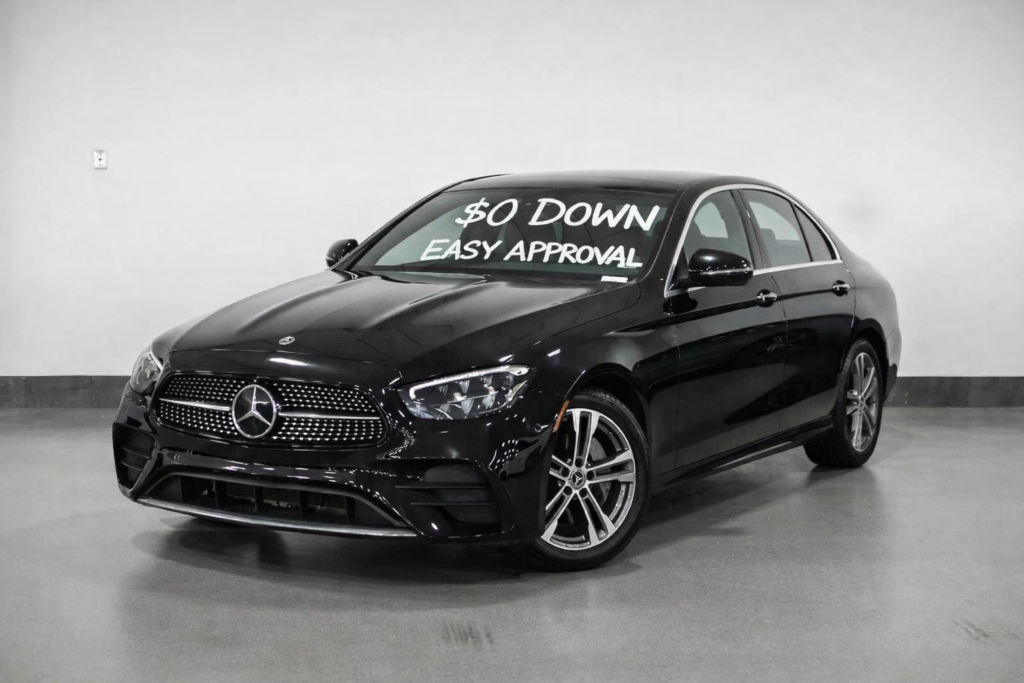
It’s crucial to understand that “zero down” rarely means “zero cost at signing.”
You will likely still need to pay for registration, title fees, and the first month’s payment upfront.
Always ask for an “out-the-door” cost breakdown.
Key Factors Lenders Evaluate (Beyond Your Credit Score)
Proof of Stable Income: Recent pay stubs, tax returns, or bank statements.
Residency Stability: A consistent address history shows reliability.
Debt-to-Income Ratio (DTI): A measure of your monthly debt obligations versus your income.
Potential Down Payment: Even $500 can improve your terms significantly.
Cosigner: A creditworthy cosigner is the single best way to secure approval and better rates.
The Truth About “Guaranteed” Car Financing for Bad Credit
Let’s be unequivocal: there is no such thing as a truly guaranteed car financing approval.
Any dealership or online lender making this promise is using a marketing tactic.
Legitimate subprime auto lenders always perform some level of underwriting—checking your income, employment, and residence.
The term “guaranteed” often refers to a high approval *rate* for applicants who meet basic, disclosed criteria, not a blanket promise.
These offers often come with significant catches. To offset the high risk of a no credit check car loan (which is illegal for traditional lenders but exists in niche, often predatory markets), lenders will impose extreme conditions.
These can include mandatory GPS tracking devices, ignition interlock systems (that can disable the car remotely for a late payment), and requirements to purchase overpriced add-ons.
The interest rates attached to these “guaranteed” plans are also typically the highest on the market.
“As of early 2026, the average interest rate for a deep subprime auto loan (credit score below 580) can range from 14% to over 20%, compared to an average of around 5-7% for borrowers with prime credit.”
The most common venue for these high-risk offers is the buy here pay here (BHPH) dealership.
While some BHPH lots are reputable, their model is built on in-house financing for high-risk borrowers, leading to higher costs.
Understanding this landscape is key to avoiding devastating financial traps while seeking second chance auto loans.
Your Pre-Application Checklist
Credit Report: Reviewed and corrected for errors.
Budget: Max monthly payment and out-the-door price determined.
Documents: Driver’s license, proof of income (last 2-3 pay stubs), proof of residence (utility bill), and list of personal references compiled.
Insurance Quote: Contacted insurers for a quote on the models you’re considering; full coverage is mandatory.
Pre-Qualification: Secured from at least one lender to use as leverage.
Frequently Asked Questions (FAQ)
❓ Can I really get a car with no money down and bad credit?
Yes, it is possible, but it is not easy or cheap. Lenders will heavily scrutinize your proof of stable income and employment.
You will face very high interest rates, longer loan terms, and may be restricted to older or higher-mileage vehicles. Having a cosigner or being willing to shop at specialized buy here pay here dealerships increases your chances significantly.
❓ What are the best lenders for bad credit auto loans?
In 2026, some of the most accessible lenders for subprime borrowers include Capital One (for pre-qualification), Westlake Financial, and Exeter Finance.
Larger buy here pay here chains like DriveTime are also options. Don’t forget to check with local credit unions, as they often have more flexible member-based programs.
❓ How does a ‘buy here pay here’ dealership work?
A buy here pay here (BHPH) dealership finances the car purchase in-house. You make weekly or bi-weekly payments directly to the dealer, often at the lot.
They typically don’t rely on traditional credit checks but emphasize income verification. Many use GPS trackers or ignition interrupt devices.
The key advantage is high approval odds; the downsides are very high interest rates and often less reliable vehicles.
❓ What interest rate can I expect with a poor credit score?
As of early 2026, borrowers with credit scores below 580 (deep subprime) can expect interest rates starting from 14% and often exceeding 20%.
Scores in the 580-619 range (subprime) may see rates from 10% to 18%. These rates are dramatically higher than the sub-7% rates offered to borrowers with good credit.
❓ What documents do I need to apply for bad credit car financing?
Be prepared with: a valid driver’s license, proof of income (last 2-3 pay stubs or bank statements), proof of residence (a recent utility bill or lease agreement), a list of 4-6 personal references (with phone numbers), and potentially a recent phone bill.
Having these ready speeds up the process and shows you are a prepared, serious buyer.
