
Upgrade Your Riding Experience Today With the Yamaha R3 2025
Considering the Yamaha R3 for 2025? Explore detailed specifications, real-world performance data, financing estimates, and competitive comparisons before making your final decision.
Designed for riders who want aggressive styling without overwhelming power, it strikes a calculated balance between track capability and daily usability.
In 2025, the model continues to refine its lightweight platform, delivering sharp handling, impressive fuel efficiency, and strong long-term reliability.
Compare best motorcycle loan companies, review rates, approval rules, and loan terms to secure affordable financing and predictable payments.
Yamaha R3 Engine Architecture and Performance Output 🚀
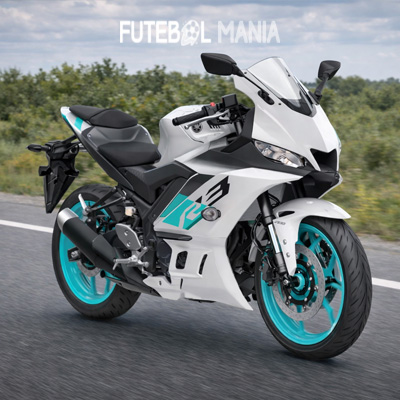
At the core of the Yamaha R3 is a 321cc liquid-cooled parallel-twin engine built with dual overhead cams and four valves per cylinder.
This high-revving configuration allows the engine to deliver smooth acceleration while maintaining durability under sustained load.
What makes the R3 unique is not raw numbers, but how efficiently it uses them. The engine thrives at higher rev ranges, rewarding riders who carry momentum through corners.
| Specification | Yamaha R3 2025 |
| Engine Type | 321cc Parallel Twin |
| Bore x Stroke | 68.0mm x 44.1mm |
| Compression Ratio | 11.2:1 |
| Horsepower | ~42 hp |
| Torque | ~21.8 lb-ft |
| Transmission | 6-speed manual |
| Wet Weight | 375 lbs |
| Seat Height | 30.7 in |

Yamaha R3 Frame Geometry and Handling Precision 🏍️
Handling is where the Yamaha R3 truly excels. The diamond-type steel frame provides rigidity without excessive weight, ensuring predictable lean-in behavior and stability under braking.
The 37mm KYB inverted front fork improves front-end feedback, especially during aggressive corner entry.
Rear suspension is handled by a monocross shock, tuned for balance between street comfort and track firmness.
Wheelbase measures approximately 54.3 inches, contributing to quick directional changes while maintaining straight-line composure.
Braking System and Tire Configuration ⚙️
The braking setup includes:
- 298mm front disc brake
- 220mm rear disc brake
- Dual-channel ABS standard
Stock tire sizing (110/70 front and 140/70 rear) ensures neutral steering characteristics.
Riders seeking enhanced track grip often upgrade to performance-oriented compounds, which further amplify the agility of the Yamaha R3.
Pricing Structure and Ownership Economics of the Yamaha R3 💵
The MSRP for the 2025 R3 begins around $5,499 in the United States.
This pricing keeps it competitive against other lightweight supersports while undercutting larger 600cc machines significantly.
In addition to purchase price, total ownership cost plays a major role in decision-making.
| Expense Category | Est. Annual Cost |
| Insurance | $600 – $1,200 |
| Fuel | $350 – $650 |
| Routine Maintenance | $400 – $750 |
| Tires (if replaced) | $300 – $500 |
Yamaha R3 Versus Segment Rivals in 2025 ⚔️
Competition in the 300–400cc sport category remains strong. Understanding how the R3 compares clarifies its position.
Yamaha R3 vs Kawasaki Ninja 400 🆚
The Ninja 400 offers approximately 45 horsepower from its 399cc engine.
While it delivers slightly stronger straight-line acceleration, many riders praise the smoother throttle modulation and high-rev refinement of the R3.
Yamaha R3 vs KTM RC 390 🆚
The KTM RC 390 produces aggressive torque from its single-cylinder configuration. However, the R3 provides smoother highway cruising and often superior long-term reliability.
Yamaha R3 vs Honda CBR300R 🆚
The Honda CBR300R is beginner-friendly but produces less horsepower. In contrast, the R3 offers a more track-oriented character with stronger top-end performance.
Comparative Performance Table 📊
| Model | Horsepower | Wet Weight | MSRP |
| Yamaha R3 | 42 hp | 375 lbs | $5,499 |
| Kawasaki Ninja 400 | 45 hp | 366 lbs | $5,699 |
| KTM RC 390 | 44 hp | 379 lbs | $5,899 |
| Honda CBR300R | 30 hp | 357 lbs | $4,999 |
Track-Day Capability and Modification Potential of the Yamaha R3 🏁
The R3 is widely used in amateur racing leagues and track-day environments. Its predictable chassis and rev-happy engine make it ideal for developing corner speed skills.
Common upgrades include:
- Aftermarket exhaust systems
- Adjustable rearsets
- Steel braided brake lines
- ECU tuning modules
Because the platform is lightweight, small performance upgrades produce noticeable improvements.
Riders frequently describe the R3 as a “momentum machine,” encouraging technical riding precision rather than relying on horsepower alone.
Analyze motorcycle loans available in the U.S. and learn how interest rates, terms, and lender criteria shape real ownership costs over time.
Financing and Insurance Options for Yamaha R3 Buyers 💳
Financing a R3 is typically more accessible than financing higher-displacement sport motorcycles. Motorcycle loan APRs range between 6% and 12% depending on credit profile.
| Price | Down Payment | Loan Term | APR | Est. Monthly |
| $5,499 | $500 | 60 months | 8% | ~$110 |
| $5,499 | $1,000 | 48 months | 7% | ~$107 |
Insurance varies by age and riding history, but average annual premiums remain significantly lower than those of 600cc supersports.
Reliability, Maintenance Intervals, and Resale Value 🔧
Yamaha’s engineering consistency enhances long-term reliability. Routine maintenance for the R3 includes:
- Oil changes every 3,000–4,000 miles
- Periodic valve clearance inspections
- Chain lubrication and adjustment
- Brake pad inspections
Many owners report exceeding 30,000 miles without major mechanical repairs when maintenance schedules are followed carefully.
Resale value typically remains strong, with depreciation averaging 25–35% over three years. This retention rate strengthens the overall value proposition of the Yamaha R3.
Experience Lightweight Supersport Confidence With the Yamaha R3 🚘
The R3 continues to prove that performance is not defined solely by engine displacement.
Its lightweight chassis, responsive twin-cylinder engine, and race-inspired ergonomics create a motorcycle that rewards skill development and disciplined riding.
Ownership costs remain reasonable, insurance premiums are accessible, and financing options are practical for many U.S. riders.
When chosen thoughtfully and maintained responsibly, the R3 becomes more than an entry-level sportbike—it becomes a platform for growth, precision, and long-term satisfaction.
FAQ ❓
- Is the Yamaha R3 powerful enough for highway riding?
- Yes, it comfortably maintains highway speeds, though wind resistance is noticeable at higher speeds.
- What is the top speed of the R3?
- Under optimal conditions, top speed typically reaches approximately 110–115 mph.
- Is the R3 good for beginners?
- Yes, its manageable power delivery and predictable handling make it suitable for new riders.
- How much does it cost to maintain annually?
- Average annual maintenance ranges between $400 and $750 depending on mileage and service intervals.
- Does the Yamaha R3 perform well on track days?
- Yes, it is widely used for track training and amateur racing due to its agility and lightweight design.
